Blog / Hammond Cadillac Dealer

Cadillac XT5 vs Cadillac XT6: Space, Comfort, and Family-Focused Capability Compared

When comparing the Cadillac XT5 and XT6, the decision centers on space architecture, seating configuration, and how each vehicle supports daily use. Both SUVs share Cadillac’s design language and available powertrains, but they are engineered for different ownership priorities. One prioritizes two-row balance and maneuverability. The other is built around three-row flexibility and expanded passenger capacity.

Understanding how their platforms, dimensions, and interior packaging differ is what makes the comparison meaningful.

Platform and Size: How Much Larger Is the XT6?

The XT5 is classified as a midsize two-row SUV. The XT6 is a longer, three-row midsize SUV built on an extended wheelbase version of GM’s C1 platform.

Key dimensional differences:

  • Overall Length
    • XT5: Approximately 189.6 inches
    • XT6: Approximately 198.5 inches
      The XT6 is nearly nine inches longer, which directly supports third-row packaging and added cargo volume.
  • Wheelbase
    • XT5: Around 112.5 inches
    • XT6: Around 112.7 inches
      While the wheelbase difference is modest, the XT6 uses its extended body length to optimize rear seating geometry.
  • Seating Capacity
    • XT5: 5 passengers
    • XT6: 6 or 7 passengers depending on second-row configuration

The XT5’s shorter overall length makes it easier to maneuver in tighter urban environments. The XT6 sacrifices a small degree of compact feel in exchange for third-row practicality.

Interior Layout and Passenger Comfort

The most significant difference between these SUVs is seating architecture.

XT5 Interior Configuration

The XT5 is engineered around a two-row layout with generous second-row legroom and flexible cargo storage. Its rear seat slides and reclines, allowing owners to balance passenger comfort with cargo needs.

Highlights:

  • Spacious second-row legroom for adult passengers
  • Flat load floor when rear seats are folded
  • Lower step-in height for easier entry
  • Cabin proportions focused on five-passenger comfort

The XT5 prioritizes second-row comfort over maximum passenger count. For families with one or two children, it provides more usable daily space than a cramped third row would.

XT6 Interior Configuration

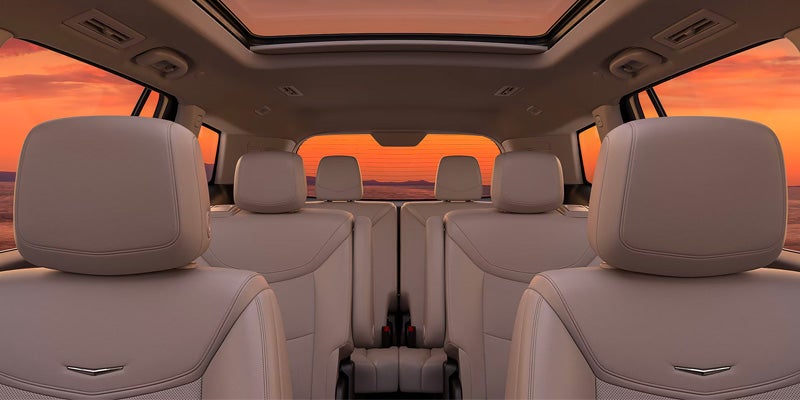
The XT6 introduces a true third row, available with either:

  • Second-row captain’s chairs for six passengers
  • A second-row bench for seven passengers

Important third-row realities:

  • Best suited for children or shorter adults on longer drives
  • Legroom is adequate but not expansive
  • Designed for flexibility rather than constant full occupancy

Cargo space behind the third row is usable for grocery runs and small luggage. With the third row folded, the XT6 transforms into a large two-row cargo hauler.

The XT6 exists for households that occasionally or frequently need extra seating capacity.

Cargo Space Comparison

Cargo volume is one of the most researched elements in this comparison.

XT5 Cargo Capacity:

  • Behind second row: Approximately 30 cubic feet
  • With rear seats folded: Around 63 cubic feet

XT6 Cargo Capacity:

  • Behind third row: Approximately 12 cubic feet
  • Behind second row: Around 43 cubic feet
  • With second and third rows folded: About 78 cubic feet

The XT5 offers more cargo space than the XT6 when both are configured as two-row vehicles. The XT6 surpasses it when fully opened up with all seats folded.

This means:

  • If you rarely use a third row, the XT5 may provide more everyday cargo efficiency.
  • If you need flexible seating plus large hauling capability, the XT6 offers greater overall volume.

Powertrain and Performance Differences

Both SUVs offer similar engine options, but how they are positioned matters.

Standard Engine:

  • 2.0L turbocharged inline-four
  • Approximately 235 horsepower
  • Paired with a 9-speed automatic transmission

Available Upgrade:

  • 3.6L V6
  • Approximately 310 horsepower
  • Enhanced passing and merging performance

Drive Configuration:

  • Front-wheel drive standard
  • Available all-wheel drive

Driving Behavior:

The XT5 feels lighter and slightly more responsive in city driving due to its shorter length and marginally lower weight.

The XT6, particularly with the V6, feels more composed under load and better suited for highway cruising with multiple passengers.

Fuel Economy:

  • XT5 typically returns slightly better combined MPG due to lower mass.
  • XT6 efficiency depends on drivetrain and seating configuration.

Towing Capability

Towing is another decision point for some buyers.

  • XT5 maximum towing capacity: Around 3,500 pounds with proper equipment
  • XT6 maximum towing capacity: Up to 4,000 pounds when properly equipped

The XT6 provides a modest edge for light trailers, small boats, or recreational equipment.

Ride Quality and Handling

Both vehicles reflect Cadillac’s tuning philosophy: quiet cabins, composed suspension calibration, and controlled steering input.

XT5 Ride Character:

  • Slightly more agile feel
  • Less body movement in tight turns
  • Ideal for daily commuting

XT6 Ride Character:

  • Stable under full passenger load
  • Balanced suspension tuned for family comfort
  • Longer body enhances highway stability

Neither SUV is performance-oriented in this segment comparison. The focus is isolation, smoothness, and refinement.

Trim Strategy and Feature Alignment

Both models are typically available in:

  • Luxury
  • Premium Luxury
  • Sport

Premium Luxury focuses on comfort and chrome exterior detailing.

Sport trims introduce:

  • Darker exterior accents
  • Performance-tuned suspension
  • Standard all-wheel drive in many configurations

Technology and safety systems largely mirror each other across comparable trims, including advanced driver assistance features and Cadillac’s infotainment platform.

Which Cadillac SUV Is Right for You?

Choose the XT5 if:

  • You do not need a third row
  • Maneuverability and second-row comfort matter most
  • You want maximum cargo space in a two-row format
  • You prioritize slightly higher fuel efficiency

Choose the XT6 if:

  • You need six or seven passenger flexibility
  • You frequently transport additional family members
  • You want greater maximum cargo capacity when seats are folded
  • You prefer added highway stability with a larger body

The decision is not about one being better. It is about how often that third row will truly be used.

Both SUVs represent Cadillac’s approach to purposeful design, where interior packaging and engineering intent shape the ownership experience rather than marketing labels.

For buyers comparing these two vehicles in depth, understanding seating architecture and daily usage patterns will lead to the right choice.

Posted in:

Related Posts

XT6 vs Escalade Size Comparison for Hammond Drivers

XT6 vs Escalade Size Comparison for Hammond Drivers

XT6 vs Escalade gives shoppers two very different approaches to three row Cadillac seating. The XT6 occupies the midsize class and takes up less road space. The Escalade sits in the full size class and adds substantially more room. Therefore, the comparison should begin with physical size before trim or equipment. Length, width, passenger space, cargo room, and engine output all separate these two SUVs. Where XT6 and Escalade Sit in the Cadillac SUV Range The XT6 fills the midsize three row role in the Cadillac lineup. The Escalade sits several steps above it in physical size. Therefore, both can seat three rows without serving the same space needs. The 2025 Cadillac XT6 measures 198.5 inches long. The current Cadillac Escalade measures 211.9 inches long. That creates a 13.4 inch gap before width or wheelbase enter the comparison. Width changes too. The XT6 measures 77.3 inches across. The Escalade measures 81.1 inches. Therefore, the full size SUV occupies more room both front to back and side to side. That size gap matters before anyone enters the cabin. A shorter body can be easier to place in tighter parking spaces. A wider full size SUV gives more room inside but asks for more exterior space. For this reason, the segment label should guide the first comparison. Midsize and full size describe more than styling. They describe how much vehicle surrounds the passenger area. How Much Larger Is the Escalade? The Escalade is longer, wider, and built on a longer wheelbase than the XT6. Therefore, the difference is easy to notice before entering either cabin. The XT6 uses a 113 inch wheelbase. The Escalade stretches that measurement to roughly 121 inches. That longer distance between the axles creates more room for seating and cargo. The exterior differences are easy to review together: Escalade is 13.4 inches longer than the XT6. Escalade is about 3.8 inches wider across the body. Escalade uses a wheelbase roughly eight inches longer than XT6. Those numbers also matter in a garage. A driver with limited floor space should measure the available area before comparing equipment. Door clearance deserves attention too because Escalade also occupies more width. The XT6 asks for less space around the vehicle. Therefore, it can suit someone who wants three rows without stepping into full size dimensions. What Does the Extra Escalade Size Add Inside? The extra Escalade size adds third row room, greater cargo volume, and an available eighth seating position. Therefore, the exterior growth creates measurable changes inside. The XT6 seats seven. Escalade can seat up to eight. That difference matters when an extra passenger position is useful more than once or twice each year. Third row legroom also grows. XT6 provides 29.5 inches in the third row. Escalade provides 34.9 inches. That 5.4 inch gap can make a noticeable difference for taller passengers. Cargo room changes even more. The XT6 provides 12.6 cubic feet behind its third row. Escalade provides 25.5 cubic feet behind its third row. That means Escalade keeps much more cargo room when all seats stay upright. The difference can matter when passengers and luggage need space at the same time. Maximum cargo volume also separates the two: XT6 provides up to 78.7 cubic feet with rear seating folded. Escalade provides up to 120.5 cubic feet behind the first row. Escalade keeps about twice the cargo room behind the third row. The XT6 still provides three rows in a smaller package. However, Escalade converts its larger exterior footprint into much more interior volume. How Powertrain Scale Changes Too The segment difference continues beneath the hood. The 2025 XT6 offered two gasoline engine choices. Escalade uses a larger standard engine with much greater output. XT6 starts with a 2.0 liter turbocharged four cylinder engine rated at 235 horsepower. An available 3.6 liter V6 raises output to 310 horsepower. The current Escalade uses a 6.2 liter V8 with 420 horsepower. Therefore, the gap between these SUVs extends well beyond exterior measurements. That output supports a much larger vehicle. Escalade also carries more passenger and cargo volume. The engine comparison makes more sense when viewed beside the physical scale of each SUV. A shopper should still compare the exact vehicle on the lot. Trim, drivetrain, and equipment can change from one unit to another. For this reason, the model name alone should not settle the engine discussion. Check the engine, drivetrain, and equipment listed for the specific SUV. Which Footprint Fits Your Roads and Garage? A three row SUV should fit where you use it most. Therefore, exterior measurements deserve as much attention as passenger space. The XT6 can make sense for drivers who want three rows with less overall length. That smaller footprint can simplify parking in tighter lots or garages. Escalade asks for more room around the vehicle. However, that larger footprint is tied directly to more passenger and cargo space. Before choosing, check a few physical limits at home and around your normal routes: Measure garage depth and width with room left for opening doors. Check whether frequent parking areas have narrow spaces or tight turns. Compare how often you need the third row and cargo area at the same time. A larger SUV can offer more room, but that room comes with a larger exterior package. The XT6 takes the opposite approach by fitting three rows into a midsize footprint. That distinction is the heart of the XT6 vs Escalade comparison. Comparing Both Around the Space You Actually Need XT6 vs Escalade becomes easier to sort once you separate interior needs from exterior space. The XT6 uses a smaller body and still provides three seating rows. Escalade adds more third row room, cargo capacity, seating capacity, and engine output. Start with the spaces you cannot change. Measure the garage, driveway, and parking areas you use most. Then think about how frequently the third row stays occupied. If you carry passengers and cargo together, the Escalade numbers deserve close attention. If exterior size matters more, the XT6 keeps the package considerably smaller. Ross Downing Cadillac can help you compare both models around the dimensions that matter most. You can also review available Cadillac XT6 inventory before your visit. Sit in the third row and inspect the cargo area. Then compare the exterior footprint before making your decision.

How Many Miles Can a Cadillac Escalade Last With Maintenance

How Many Miles Can a Cadillac Escalade Last With Maintenance

How many miles can a Cadillac Escalade last when service stays current? The answer varies by vehicle history, mileage, repair records, and care. However, scheduled maintenance gives owners a clear way to protect the SUV as miles build. Cadillac uses mileage intervals, the Oil Life System, and the Owner’s Manual to guide service. Therefore, a mileage based plan gives a more accurate path than a fixed calendar schedule. Start With the 7,500 Mile Service Rhythm Cadillac uses a recurring 7,500 mile rhythm for core maintenance on gasoline powered vehicles. That interval includes oil and filter service plus tire rotation. Therefore, these tasks form the base of an Escalade maintenance plan. Oil service protects internal engine parts from heat, deposits, and friction. The Oil Life System tracks operating data and signals when service is due. However, owners should still follow the exact guidance in their Cadillac Owner’s Manual. Tire rotation moves each tire to a different position on the SUV. As a result, tread wear can stay more even across all four corners. Rotation also gives the service team another chance to inspect tread, pressure, and visible damage. A recurring visit may include several basic checks: Oil and filter service supports clean lubrication inside the engine. Tire rotation helps distribute tread wear across the vehicle. A visual inspection can identify leaks, tire damage, or worn brake parts. These recurring items matter because later service builds on them. Therefore, a missed early interval can leave gaps in the vehicle’s maintenance record. What Changes Between 22,500 and 60,000 Miles? This mileage range adds more inspection and replacement items to the recurring service rhythm. Filters, brakes, tires, battery health, and coolant may need closer attention. Therefore, the service visit begins covering more than oil and rotation. Engine air filters help keep debris from entering the intake path. Cabin filters clean incoming air before it reaches the passenger area. As a result, replacement timing matters when either filter becomes restricted. Brake inspections also become more important as mileage rises. Technicians can measure pad material and review rotor condition during service. Therefore, the owner can see how much material remains before replacement becomes necessary. Battery testing can also reveal reduced starting reserve before a no start event occurs. In addition, coolant checks help confirm fluid level and visible condition. These items may not need replacement at the same mileage on every Escalade. For this reason, service records become useful during this phase. They show what has already been completed and what still needs review. Maintenance From 60,000 to 90,000 Miles Mileage from 60,000 through 90,000 brings more mechanical items into the service discussion. Cadillac’s general guidance includes transmission service, belts, hoses, shocks, and struts in later mileage ranges. Transmission fluid supports lubrication, heat control, and hydraulic operation inside the transmission. Therefore, correct service timing matters for smooth gear changes and internal protection. The exact interval should come from the Escalade Owner’s Manual. Belts and hoses also deserve closer inspection as age and mileage rise. Rubber parts can harden, crack, swell, or lose tension. As a result, visible wear can signal the need for replacement before a failure occurs. Shocks and struts control wheel movement and body motion over bumps. Worn parts can change ride control, tire contact, and steering response. Therefore, inspection matters when the SUV begins showing new movement, noise, or uneven tire wear. At this stage, owners should compare current mileage with completed service. That comparison keeps the next visit tied to the vehicle’s actual history. What Should You Review After 90,000 Miles? Higher mileage service combines scheduled items with a careful review of previous maintenance. Spark plugs, differential service, fluids, and wear parts may need attention. Therefore, records become more useful as the odometer climbs. Spark plugs create the spark that starts combustion inside each cylinder. Worn plugs can lead to harder starts, rough running, or reduced fuel efficiency. The correct replacement interval can vary by engine and model year. Differential fluid protects gears that divide power between the drive wheels. In addition, four wheel drive models may require added drivetrain checks. Exact service timing should follow the correct Owner’s Manual. Before scheduling higher mileage work, review these records: Confirm the last oil service, tire rotation, and brake inspection. Check whether transmission, differential, and coolant service has already been completed. Note any previous suspension, battery, belt, hose, or spark plug work. This review can prevent duplicate service and reveal missed items. Therefore, the next appointment can focus on what the Escalade still needs. How Maintenance Connects With Escalade Longevity How many miles can a Cadillac Escalade last cannot be answered with one guaranteed number. Independent data can describe broad trends, but each SUV develops its own service history. Therefore, the more useful question is whether maintenance has kept pace with mileage. Independent vehicle lifespan data can provide broad context for higher mileage ownership. However, those figures describe groups of vehicles and cannot predict the future mileage of one Escalade. Service history adds context to any higher mileage SUV. Regular oil changes support engine lubrication. Tire care, brake inspections, fluid service, and scheduled replacement items also keep major components under review. However, maintenance cannot prevent every repair. Age, prior damage, towing history, climate, and previous service quality can all shape future needs. Therefore, a technician should inspect the specific Escalade instead of relying only on mileage. Owners considering a higher mileage Escalade should review records before purchase or continued ownership. A complete file can show whether major intervals were completed when due. Build the Schedule Around Your Exact Escalade Cadillac gives owners several tools for planning service. The Owner’s Manual provides the exact maintenance schedule for a specific model year and powertrain. In addition, the myCadillac app can display service information for supported vehicles. Start with the current odometer reading. Then compare that mileage with the maintenance history and the correct manual. Therefore, you can identify which recurring tasks and larger milestones are due next. The Oil Life System adds another useful signal for engine oil service. However, it should work with the manual and service history, not replace them. A service advisor can also review prior dealership records when available. Ross Downing Cadillac Certified Service can work with you to build a maintenance plan around your Escalade’s current mileage and completed service. Bring your service records when possible. Then compare them with the Owner’s Manual before approving new work. That process gives the next service visit a clear starting point.

Which Cadillac Escalade Model Is Best for You in 2026

Which Cadillac Escalade Model Is Best for You in 2026

Which Cadillac Escalade model is best for you when your family needs more room without wasting space? Start with passenger count, cargo needs, and row access. Therefore, the decision should begin with how your household uses all three rows. Standard Escalade and Escalade ESV share the same basic seating concept. However, ESV adds rear passenger room and much more cargo space behind row three. Those differences can shape school runs, road trips, sports travel, and stroller storage. Start With Passenger Count and Row Access How many seats does your family need every week? Seating fit includes passenger count, child seat placement, and access between all three rows. Therefore, the first decision is not body length. It is how people will move through the cabin. Current Escalade configurations can seat up to eight people. However, seating layout changes how row two and row three work together. A second row bench preserves an extra seating position. By contrast, captain's chairs create a center walkway toward row three. Before choosing a layout, consider how your family enters, exits, and moves between seats. A second row bench keeps another seat available when your household regularly carries more passengers. Captain's chairs create a center aisle that can make row three access simpler for older children or adults. Child seat placement should leave a workable path for passengers who still need to reach the third row. In addition, think about which passengers need the easiest door access. Younger children may stay in row two, while older children may use row three. Therefore, your seating arrangement should reflect the trips your family makes most. When Standard Escalade Has Enough Space When does standard Escalade provide enough family space? It combines three rows with 25.5 cubic feet of cargo room behind row three. Therefore, families can keep every row upright while retaining a separate rear storage area. Standard Escalade also provides 34.9 inches of third row legroom. That measurement gives rear passengers dedicated knee space within the shorter body. However, cargo needs become the more important question when every seat stays occupied. A stroller, sports bags, groceries, or several suitcases can use the rear compartment quickly. Therefore, measure the items your family carries together most frequently. One large stroller may matter more than a long list of smaller bags. The shorter body can also fit more easily into certain garages or parking areas. In addition, the standard length may suit households that rarely fill the rear cargo area completely. Families using row three only on certain trips may find this format easier to manage. For this reason, standard Escalade deserves a full review before moving directly to ESV. Passenger count alone does not require the longer body. When Escalade ESV Makes More Sense When does Escalade ESV make more sense? It adds third row legroom and far more cargo room behind the last row. Therefore, the strongest case for ESV appears when passengers and luggage travel together. Escalade ESV provides 36.7 inches of third row legroom. That gives rear passengers 1.8 additional inches beyond standard Escalade. In addition, cargo volume behind row three rises to 41.5 cubic feet. That rear cargo increase is 16 cubic feet. Therefore, ESV changes more than exterior length. It gives families much more storage while keeping all three rows available. This space can matter when your family carries a stroller, sports gear, luggage, or bulky shopping bags. Moreover, long trips can combine several of those items at once. ESV gives you more room before any passenger seat must fold. The tradeoff is a longer exterior footprint. Therefore, garage depth and regular parking locations still deserve attention. Measure your available space before assuming the larger body will fit comfortably. Which Cabin Features Matter Most for Family Travel Which Escalade features matter most during family travel? Driver assistance, rear passenger media, and seating equipment can change how long trips feel. Current Escalade models include Super Cruise. The feature supports hands free driving on compatible roads while requiring driver attention. Therefore, families planning frequent highway travel may want to understand where the feature operates and what supervision it requires. Available rear entertainment provides another family focused option. Dual rear displays give second row passengers dedicated screens. In addition, power seating functions can reduce the manual effort needed when changing passenger or cargo arrangements. Still, feature value should connect with your household routine. A family taking frequent road trips may use rear screens more than a family making short local trips. By contrast, easier row access may matter every day. Therefore, spend time inside the cabin before choosing equipment. Test seat movement, third row entry, screen placement, and cargo access with your normal passenger routine in mind. Matching the Escalade Configuration to Your Family Which Cadillac Escalade model is best for you? The answer comes from passenger count, cargo demands, parking space, and travel patterns. Start with the space you need while every passenger seat remains available. Then compare that requirement with your garage, driveway, and regular parking areas. These two configurations serve different family space priorities: Standard Escalade suits families that need three rows but can work with 25.5 cubic feet behind row three. Escalade ESV suits families that need more third row room and 41.5 cubic feet behind the last row. Either body style can work when seating layout, row access, and daily cargo needs match your household routine. In addition, bring real items into your comparison whenever possible. A stroller, child seat, sports bag, or large suitcase can reveal more than measurements alone. Ross Downing Cadillac can show you standard Escalade and Escalade ESV configurations in Hammond. Therefore, you can compare row access, third row space, and rear storage in person. Sit in every row and open the cargo area with all seats upright. That gives your family a clear way to choose the Escalade size that fits the life you already lead.